


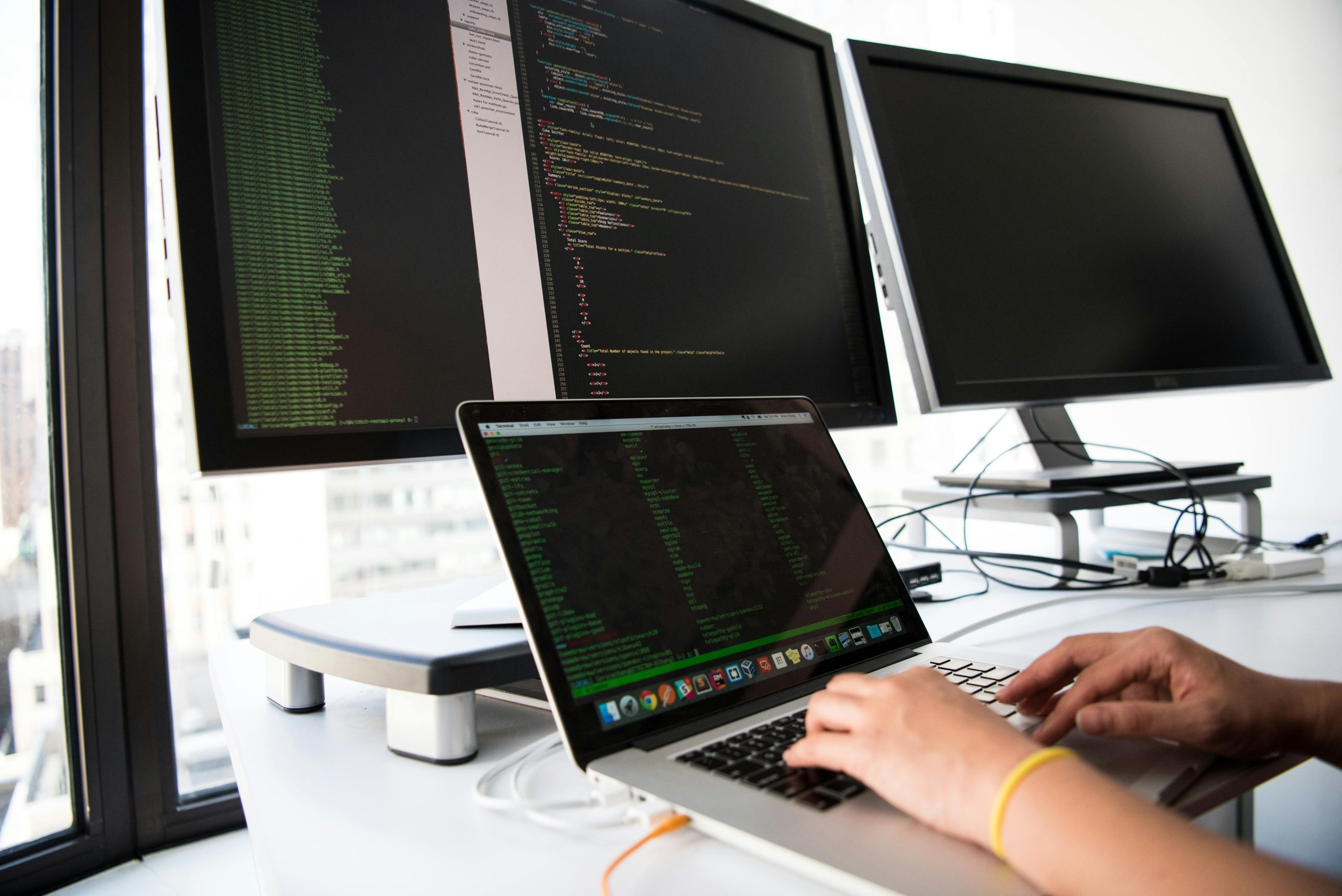
Open source OCR software has become increasingly sophisticated, offering cost-effective alternatives to premium solutions while delivering impressive accuracy rates. According to recent industry analysis, OCR technology accuracy has reached over 99% for printed text in optimal conditions as of 2025. Whether you’re digitizing historical documents, processing invoices, or building automated workflows, choosing the right OCR tool depends on your specific requirements. Want to explore comprehensive comparisons of leading solutions? Our detailed guide at https://www.koncile.ai/en/ressources/10-open-source-ocr-tools-you-should-know-about covers everything you need to make an informed decision.
Understanding OCR Technology and Its Modern Applications
Optical Character Recognition has undergone a remarkable transformation in recent years. What started as basic text scanning has evolved into intelligent document processing powered by artificial intelligence and machine learning algorithms. Modern OCR systems can now handle complex layouts, recognize handwritten text, and process multiple languages with impressive accuracy rates.
Also read : What role does AI play in the UK’s high-tech computing landscape?
The integration of deep learning has revolutionized how OCR technology approaches character recognition. Instead of relying solely on pattern matching, today’s solutions analyze context, understand document structure, and adapt to various fonts and formatting styles. This advancement has made OCR accessible to businesses of all sizes, from small startups digitizing paper archives to large enterprises automating invoice processing.
Industries across the board have embraced these capabilities. Healthcare organizations digitize patient records, financial institutions process loan applications automatically, and legal firms convert case documents into searchable databases. The technology has become particularly valuable for data extraction workflows, where accuracy and speed directly impact operational efficiency.
In parallel : Boost business success with effective product lifecycle management software
The open-source ecosystem has played a crucial role in democratizing OCR technology, offering robust alternatives to expensive commercial solutions while fostering innovation through community collaboration.
Essential Criteria for Selecting Your OCR Solution
Choosing the right OCR solution requires careful evaluation of several technical and practical factors. With numerous open source options available, understanding your specific requirements will guide you toward the most suitable tool for your project.
Here are the key criteria to consider when selecting your OCR solution:
- Recognition accuracy – Test the tool’s performance on your specific document types, as accuracy varies significantly between printed text, handwritten content, and low-quality scans
- Language support – Verify that your target languages are supported with reliable detection algorithms, especially for non-Latin scripts or specialized character sets
- Integration capabilities – Assess how easily the solution integrates with your existing workflow, including API availability, programming language compatibility, and deployment options
- Processing performance – Evaluate speed and resource consumption, particularly important for batch processing or real-time applications
- Output formats – Ensure the tool supports your required output formats, whether plain text, PDF with searchable text, or structured data extraction
- Document specialization – Consider tools optimized for your document types, such as historical manuscripts, forms, receipts, or technical drawings
Each criterion’s importance varies based on your use case, making thorough testing with your actual documents essential before final selection.
Top-Tier Tools: Tesseract, EasyOCR and Advanced Alternatives
Tesseract stands as the undisputed veteran of open source OCR, backed by Google’s continuous development since 2006. This robust engine excels at processing high-quality scanned documents and supports over 100 languages through its extensive training data. However, Tesseract requires significant preprocessing for optimal results and struggles with handwritten text or poor-quality images.
EasyOCR emerges as the modern challenger, leveraging deep learning neural networks to deliver impressive accuracy straight out of the box. Its Python-friendly architecture makes integration seamless for developers, while its ability to handle rotated text and complex layouts surpasses traditional approaches. The trade-off lies in higher computational requirements and slower processing speeds compared to Tesseract’s lightweight operation.
PaddleOCR represents the cutting-edge alternative, offering multilingual support with particularly strong performance on Asian characters. Developed by Baidu, it combines speed with accuracy but demands more technical expertise for implementation. Each solution targets different use cases: Tesseract for volume processing, EasyOCR for versatility, and PaddleOCR for specialized multilingual projects.
Specialized Solutions for Complex Document Processing
Some document challenges exceed the capabilities of generic OCR tools. Handwriting recognition, processing degraded historical documents, or analyzing complex formats require specialized solutions with advanced algorithms.
For handwritten documents, TrOCR excels thanks to its transformer architecture, which better understands variations in handwriting. This Microsoft tool handles personal notes and handwritten forms particularly well, where traditional Tesseract shows its limitations.
Historical archives find their champion in Kraken, specifically designed for ancient texts. Its ability to adapt to Gothic fonts, medieval manuscripts, and partially damaged documents makes it the go-to tool for digital libraries.
Massive batch processing benefits from the optimizations of OCRmyPDF, which automates the integration of text layers into thousands of PDFs simultaneously. This industrial approach makes it possible to process enormous volumes while preserving the structural quality of the original documents.
Implementation Best Practices and Performance Optimization
Optimal setup begins with meticulous preparation of your source documents. The quality of the input image directly impacts recognition performance: prioritize a minimum resolution of 300 DPI and ensure sufficient contrast between the text and background.
Adjusting settings according to the usage context significantly improves accuracy. For old or handwritten documents, increase detection sensitivity and enable noise reduction filters. Modern printed texts benefit from a more direct approach with high confidence thresholds.
Overall performance also depends on your integration strategy. Implement a caching system to avoid reprocessing identical documents and configure an automated preprocessing pipeline. This approach reduces processing times by an average of 40% while maintaining consistent quality of results.
Frequently Asked Questions About OCR Tools
What is the best free OCR software for scanning documents in 2025?
Tesseract remains the top choice for accuracy and language support. For beginners, GOCR offers simpler setup, while EasyOCR excels with modern neural networks for complex documents.
Which open source OCR tool works best for handwritten text recognition?
EasyOCR performs best with handwritten text thanks to its deep learning architecture. TrOCR also shows excellent results for cursive writing, though it requires more technical setup.
How do I choose between Tesseract and EasyOCR for my project?
Choose Tesseract for high-volume processing and extensive language support. Pick EasyOCR for better accuracy with low-quality images, handwriting, or when you need simpler Python integration.
What OCR software can handle multiple languages accurately?
Tesseract supports over 100 languages with excellent accuracy. EasyOCR covers 80+ languages with strong performance, while PaddleOCR excels particularly with Asian languages and mixed-language documents.
Are there any OCR tools that work well with historical documents?
Kraken specializes in historical manuscripts and ancient texts. TrOCR also performs well with old documents, while Tesseract with proper preprocessing can handle vintage printed materials effectively.